




Author: admin

  • How I Choose Natural Fibers for a Pair of Natur-yl Earrings

    How I Choose Natural Fibers for a Pair of Natur-yl Earrings

    Choosing a fiber for earrings means looking beyond a pretty color. I want to know what the strand contains, how it behaves in a small shape, and what I can honestly say about the finished pair. For Natur-yl, that starts with a materials notebook before a product description.

    A soft, simple design is the direction. The details still matter: the fiber, the findings, and the way the pair comes together. This is a look at the questions behind that choice, rather than a finished-product reveal.

    Start with what the label actually says

    “Natural” is a starting point, not a complete materials list. Cotton and wool are different fibers, and a yarn can contain a blend. Before naming a material in a listing, keep the label or supplier description with the making notes. Record the stated fiber percentages and identify which part of the earring they describe.

    A cotton body does not make every component cotton. Hooks, jump rings, thread, backing, and any adhesive need their own notes. If a component is uncertain, leave the claim out until it is checked.

    Look at texture at the scale of an earring

    A strand can look lovely in a skein and behave differently in a small piece. Make a sample in the intended shape. Look at the edges, the thickness, and whether the detail is still visible from a little distance. Hold it against a plain card so the background does not do all the work.

    Ask a practical question: does this texture suit the design? A soft outline and a defined outline can both be beautiful. Choose deliberately, and keep a note of the sample that produced the result you wanted.

    Check the whole pair, including the hooks

    The fiber gets the close-up, but the findings are part of what someone wears. Record the supplier’s stated hook metal separately. A silver-colored finish alone does not establish what the metal is.

    Do not turn an unconfirmed metal description into a comfort or allergy promise. A useful product description tells the reader what is known, including the component involved, so she can make her own decision.

    Try the actual sample before writing the reveal

    Once a pair exists, look at how it hangs and moves. Check that the two pieces belong together, that connections are secure, and that the finish matches what you intend to show. If you wear-test the sample, describe only what you observed. “Lightweight” should not stand in for an actual weight or a clear description of the specific pair.

    The same honesty applies to photographs. A close-up of the real materials and the real finished piece says more than an illustration that looks like a product photograph. The artwork accompanying this notebook is illustrative; it does not show an available Natur-yl pair.

    Keep one simple materials card

    • Fiber: exact composition stated by the label or supplier.
    • Source: supplier and label information kept with the sample.
    • Findings: stated metal for hooks and other components.
    • Construction: what was used to assemble this pair.
    • Sample notes: shape, movement, finish, and any changes made.
    • Care: instructions appropriate to the actual materials, once confirmed.

    That card becomes the foundation for a clear description. It also helps separate the brand’s direction from the facts of one particular item. Wanting natural materials is a creative intention; naming the materials in a pair is a specific claim to check.

    Let the making take the time it needs

    There is something satisfying about paying attention to a small object. The fibers, a neat connection, the way a shape rests against a card—those details can carry the whole design without adding more decoration.

    If your making space shares a room with everything else, the one-corner workday reset offers a small place to begin. A clear patch of table and one materials card can be enough for the next step.

    For this Natur-yl notebook, the next step is to document an actual pair: fiber label, hook information, process close-up, and finished view. Which detail would you like to see first—the texture or how the pair comes together?

    ~Until next time~

  • A Workday Reset When the Apartment Is Still Lived In

    A Workday Reset When the Apartment Is Still Lived In

    You can reset a workday without resetting the whole apartment. Choose one useful corner, remove what gets in the way, and leave yourself one clear next step. The rest of the room can still look lived in.

    When home holds work, meals, learning, and everybody’s belongings, the mess can feel like a running commentary on everything unfinished. But a basket on the floor does not cancel the work you did. A crowded counter does not mean the day was wasted.

    This is a small reset to try when you need a little breathing room without turning the evening into another shift.

    Give one corner one job

    Start with the place that would make the next part of your day easier. That might be your desk before a work block, a chair where you want to sit, or a small patch of counter for preparing food.

    Choose a useful result: “There is room for my notebook” is clearer than “This apartment needs to look better.” You are making space for an action, not arranging a room for an audience.

    Move the things that block that job

    Take dishes to their usual place. Put loose papers together. Return the few items whose homes are close by. If something belongs elsewhere and you cannot deal with it now, collect it in one temporary tray rather than starting a tour of every room.

    That tray is a pause, not a new permanent pile. Choose a later moment to empty it. For now, stop when the corner can do its job.

    Keep work and home from spilling into every minute

    If you are working, save this reset for a time when you are free to step away. You do not need to squeeze a chore into every pause between tasks. A break can simply be water, a stretch, or a few quiet minutes.

    At the end of a work block, close what you can close. Put notes where you will find them again. Keep private work information out of family spaces and out of any footage you record.

    Write one next step

    A whole list can follow you around the room. A single next step gives the reset somewhere to end.

    Try a plain note: “Open the lesson book after breakfast,” “Review the first task when work starts,” or “Put the tray away after dinner.” Pick the one that fits your actual day. You do not need a new planner or a full routine to do this.

    Let the room stay honest

    You can leave a blanket on the sofa. You can leave tomorrow’s laundry for tomorrow. If the cleared corner is useful, the reset has already done something.

    If you want to film it, keep the camera on what actually happens: the mug being set down, papers being gathered, a notebook opening. A small finished action is enough of a story. There is no need to pretend the rest of the apartment transformed off camera.

    A tiny reset you can borrow

    • Choose one corner and name its job.
    • Remove only what blocks that job.
    • Put loose items together for a later return.
    • Leave the tool you need next within reach.
    • Write one next step, then stop.

    Some days you will want to do more. Some days that little patch of space will be all you have the energy for. Both can be real days.

    If finding remote work is part of your next step, the October 19 customer-service jobs roundup includes the location limits and employer links checked for that post. Openings can change; check the employer page again before applying.

    What is one ordinary thing that helped your day? Start there. You do not have to clear the whole apartment to make room for yourself.

    ~Until next time~

  • This Week’s Remote Customer Service Jobs: Two Virginia Listings to Check

    This Week’s Remote Customer Service Jobs: Two Virginia Listings to Check

    This week’s customer-service roundup has two Sutherland listings for people who live and work in Virginia. One requires Spanish and English. Both support a public-utility client, including billing, service requests and outages.

    Checked October 19, 2026. The official Apply Now buttons reached recruiting pages with the matching role names. Those pages require JavaScript; the complete application forms were not tested.

    Customer Service Representatives — Emergency

    Virginia only · Job ID REF45165G

    Sutherland lists $15 per hour, performance incentives and an extra $1 for overnight shifts. The operation runs around the clock. Applicants need full-time availability, including at least one weekend day, a high school diploma or equivalent, customer-service experience and familiarity with Microsoft Office.

    The page labels the role Permanent WAH and refers to employees. It does not give exact training hours, equipment provision or internet specifications. Ask the recruiter before committing.

    Read the official listing · Open the employer-linked application

    Spanish Customer Service Representatives — Emergency

    Virginia only · Job ID REF47885S · Spanish and English required

    This listing covers similar utility-support work and requires Spanish and English, with language testing after application. It calls for full-time availability and at least one weekend day. Applicants need a high school diploma or equivalent, customer-service experience, communication skills and Microsoft Office familiarity.

    The hourly pay amount is not stated. Do not assume the rate from the other position applies. Exact training hours, equipment provision and internet requirements are also not stated. The listing is labeled Permanent WAH and uses employee wording.

    Read the official bilingual listing · Open the employer-linked application

    Check the fit before applying

    Both positions must be performed from within Virginia. These openings are unsuitable for someone planning to work from another state. Ask about training dates, assigned shifts, equipment and the pay for the exact role you select.

    A remote label tells you where the work happens; the listing tells you whether the location and schedule fit. Read the employer’s current terms before entering your information.

    This is a selected weekly roundup, not a complete inventory of every customer-service opening. Listings may change after this check.

    ~Until next time~

  • A Homeschool Learning Basket for the Days You Need to Keep It Simple

    A Homeschool Learning Basket for the Days You Need to Keep It Simple

    Some days, getting started takes more energy than the lesson itself.

    The books are in one place. The pencils have wandered off. And somehow, deciding what to do first becomes another thing on the list.

    A homeschool learning basket gives you a small place to begin. Something to read, somewhere to write or draw, and one activity worth spending a little time on.

    Use a basket, a tote, or a box you already own. It doesn’t need to look like somebody else’s homeschool shelf.

    Give your basket one job

    Before adding anything, decide when you want to use it.

    Maybe it’s for a gentle morning start. Maybe it’s reading together after lunch. Or maybe you need a short review routine for the days when the original plan has already changed.

    Choose one purpose first. Trying to squeeze every subject into the basket can turn it into another pile to sort through.

    Start with a short reading, a pencil, and a notebook. Then add an activity your child can begin without a long explanation.

    Three activity choices for different learners

    For a preschooler: read, notice, and draw.

    Choose a picture book to read together. Ask your child to find something round, point to matching colors, or draw a favorite part with chunky crayons.

    Keep it conversational. There doesn’t need to be a worksheet afterward.

    Stay involved and choose materials suitable for your child. Avoid small loose pieces around children who still put objects in their mouths.

    For an elementary learner: read, retell, and make.

    Add a short book or passage, a notebook, and a pencil.

    After reading, invite your child to draw three events in order or write a few sentences about what happened. For a hands-on choice, fold paper into a little booklet and give the story a different ending.

    If they get stuck, start with one question: “What do you remember first?”

    For an older learner: read, question, and explain.

    Choose a history, science, or literature passage that connects with current lessons.

    Add three prompts to the notebook:

    • What is the main idea?
    • What supports that idea?
    • What would you investigate next?

    Your child can write a short response or explain it aloud, then return to the passage to check the details.

    Choose the version that fits your learner. Reading confidence and the amount of help needed matter more than making the activity match a particular age label.

    Make the first step easy to see

    Place a small card on top:

    Read a little. Tell what you noticed. Choose one thing to make or write.

    Now the activity has a beginning and an end.

    If your child needs help getting started, do the first part together. If the passage is frustrating, shorten it or choose something more accessible.

    The basket is a starting routine. It doesn’t have to carry the entire school day, and it doesn’t replace adult supervision or a care arrangement during paid work.

    Keep a small record

    When you finish, write down what actually happened: the passage read, the activity completed, and anything worth revisiting.

    A drawing or a few sentences can stay in the notebook.

    There’s no need to turn a useful little lesson into a complicated project just to make it look more impressive.

    Leave tomorrow a starting point

    Return the pencil. Remove anything finished. Leave one clear activity ready to begin.

    Change the contents when the lesson or interest changes. You don’t need new supplies every morning.

    Start with one basket and one learner. Notice what gets used, what needs more support, and what can come out.

    What would go in your learning basket, a drawing activity, or a question to investigate?

    ~Until next time~
  • Remote Job Search Update: Check the Apply Link Before You Spend an Hour

    Remote Job Search Update: Check the Apply Link Before You Spend an Hour

    A promising search result can still lead to a dead end.

    Today’s check found two Concentrix customer-service results whose official detail pages returned “Job not found.” Those openings aren’t being presented as available here.

    A Foundever customer-service detail page was readable, but its Apply link redirected to the careers homepage during verification. That doesn’t establish whether the position is closed; a working application route wasn’t confirmed.

    Before spending time tailoring your resume, open the employer’s current listing and check:

    • Is the exact position still listed?
    • Does the location include where you live?
    • Can you meet the schedule and equipment requirements?
    • Does the application link take you to the correct position?

    If you can’t find the role again, keep searching rather than relying on the search-result summary.

    Today’s post is a job-search update, not an announcement of a verified opening.

    Start with the official Concentrix careers search or Foundever U.S. careers page.

    Checked October 14, 2026. Recheck listings before applying.

  • Feeling Overwhelmed by Motherhood and Life: Finding Balance on the Narrow Path

    Feeling Overwhelmed by Motherhood and Life: Finding Balance on the Narrow Path

    Lately, I’ve been feeling overwhelmed by life. Some of it comes from the everyday responsibilities of being a wife, a mother, and a woman trying to build something for her family. But some of it comes from learning—questioning things I once accepted and looking more closely at what I believe.

    I’ve been thinking about what’s really true beyond religion, what the Messiah came to do, who rules this world, and what it means to keep walking a path that feels narrower as I learn.

    There’s so much I want to unpack. Today, though, I just want to share where I am.

    When the Material World Takes Up Too Much Space

    The more I examine things, the more this material world feels like captivity to me. There are so many rules, bills, expectations, and demands pulling at our attention. Sometimes it feels like everything is arranged to keep us focused on surviving here, with little room left to turn our hearts toward our Eternal Father.

    And yet, I still have responsibilities here. My children need me. There’s work to do, a household to care for, and a future I’m trying to help build.

    I’m still figuring out how to meet those needs without letting them consume every part of me.

    Motherhood, Broken Sleep, and the Weight of Everyday Life

    In this season, I’ve realized that I’ve lost some of the balance I need to keep myself steady.

    Caring for my children, working, and managing my daily duties has started to feel burdensome. I can see myself heading toward burnout if I don’t address it.

    My husband and I have a date night once a month, and I value that time together. But I’m realizing that I also need relief in the everyday moments. One evening together doesn’t make up for weeks of feeling stretched thin.

    Since my youngest arrived thirteen months ago, uninterrupted sleep has been hard to come by. That has been rough. Being needed throughout the day and then waking through the night leaves very little time to recover.

    Honestly, there have been moments when I’ve felt like I don’t want to have any more children after this.

    That’s a difficult feeling to put into words, but it’s part of where I am right now. I love my children, and I’m tired. Both are true.

    I’ve even wondered whether these feelings are another distraction from the family goals we’re working toward. But I also have to consider that my exhaustion needs attention. I can’t keep pushing it aside and expect to feel balanced.

    Building a Future While Trying to Stay Present

    There’s a lot I want to accomplish: fixing my credit so we can move toward life on our land, building my business, publishing more books, and continuing to develop as a person.

    Those goals matter to me. They’re connected to the life I want for my family.

    Still, carrying all of them at once can feel heavy. Even when I’m doing one thing, my mind is often on everything else that needs to happen.

    I’m trying to think through what would help me overcome this feeling of being constantly overwhelmed. Where can I make room to rest? What needs my attention now, and what can wait? What would make an ordinary day feel more manageable?

    I don’t have all those answers yet, but I know I need to make some changes.

    My Books Are Changing as I Learn

    I’m also in the process of publishing more books. As I learn, I’ve been editing out a name I previously used because my understanding is changing.

    I may revisit and revamp my His Worth and Her Worth book series soon, too.

    That takes time and thought. I want to look carefully at what I’ve written and decide what still reflects my understanding and what needs to be revised. I’ll share more as that process unfolds.

    There are also things connected to my sisterwife that I haven’t fully dissected yet. That’s another part of my life I’m still working through, and I’m not ready to unpack all of it in this post.

    Still Walking the Narrow Path

    So that’s where I am today: learning, questioning, caring for my family, and recognizing that I need to find balance before I burn out.

    I want to keep growing closer to our Eternal Father. I also want to be present with my children and have enough energy to enjoy the life we’re building.

    I’m still here, trekking along. Some days I feel clearer than others. Today, sharing this honestly feels like a place to begin.

    If you’re feeling overwhelmed by motherhood and the weight of everyday life, what helps you make room to breathe?

    ~Until next time~

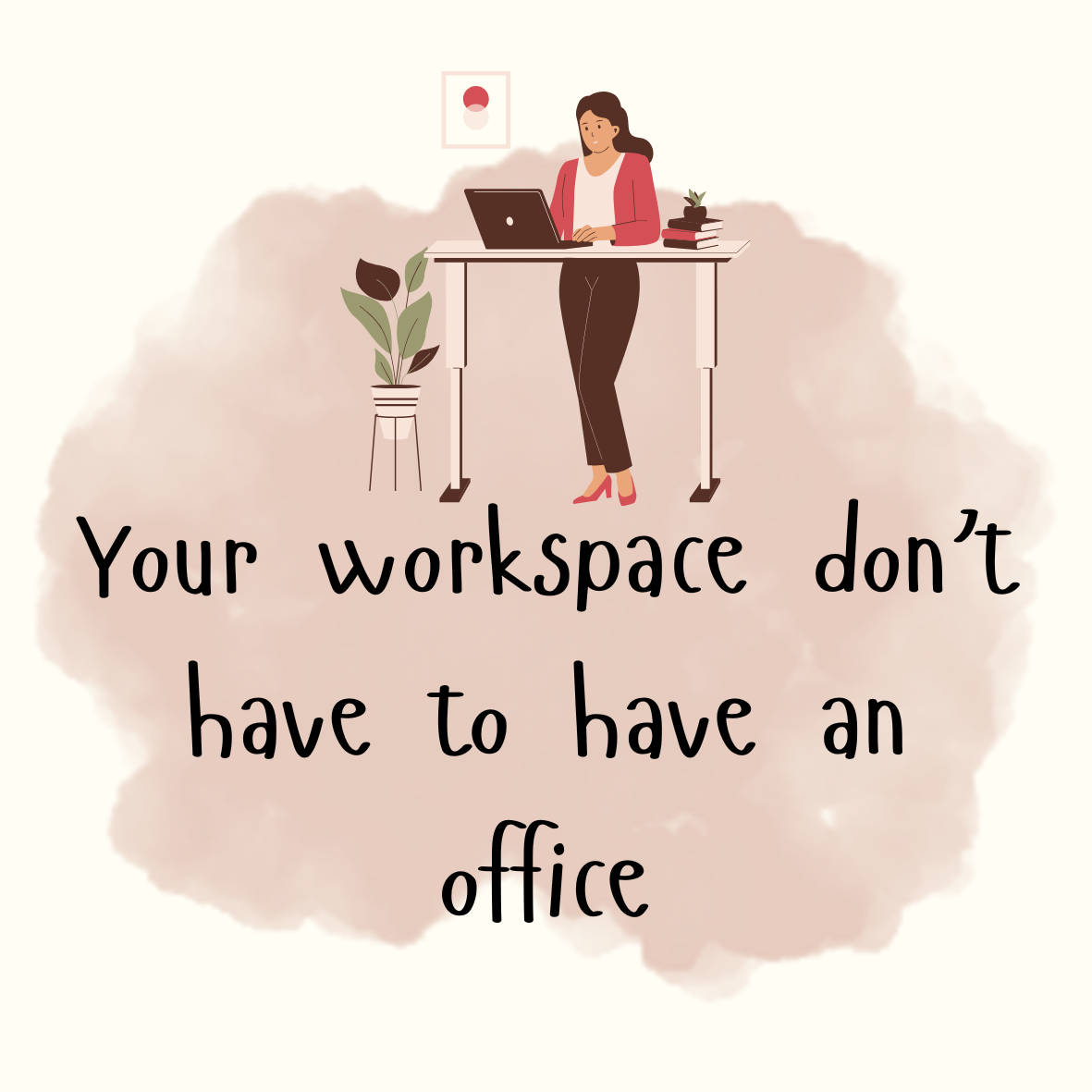
  • No Office? No Problem: Why a Mobile Standing Desk Changed My Work From Home Life

    No Office? No Problem: Why a Mobile Standing Desk Changed My Work From Home Life

    The glossy design magazines love to showcase the ideal home office. They always feature a sprawling sunlit room, an immaculate oak desk, beautiful minimalist shelving, and a complete lack of clutter. For the vast majority of us working from home, this image is an absolute fantasy. More often than not, our workspace is wherever we can find a quiet square foot of space between baby bouncy seats and middle school text books.

    Working from casual domestic spaces like the couch might seem easy at first, but it kills your physical comfort, hurts your focus, and destroys your ability to mentally detach from work at the end of the day. Fortunately, I realized that I do not need an entire spare room to build a highly effective professional setup. I just needed a mobile standing desk.

    The Ultimate Task Based Workspace

    Instead of locking myself into a tiny closet or permanently taking over the dining room table, a mobile standing desk gives me complete control over my environment. It allows me to shift my location based exactly on the type of work I need to accomplish.

    When I am scheduled for live phone support, checking voicemails, or working on my business, I can simply roll the desk right into my bedroom and shut the door. It gives me the immediate quiet, privacy, and focus I need to handle professional calls without the background noise of an eight month old babbling or an eleven year old asking for snacks.

    On the flip side, when my tasks shift to silent work like answering emails, building workflows, or managing chat channels, I do not have to stay isolated in a back room. I can roll my desk right into the play area to have direct access to the baby. This is an absolute lifesaver when I want to give my eleven year old a well deserved break from helping me out. I can easily keep one eye on my youngest while tackling my inbox. I can also roll the desk out to the living room to oversee the summer school curriculum, move to the kitchen, or simply chase the natural light around the house. I get the structure of a real desk with the flexibility of a laptop.

    My Mobile Office Optimization Checklist

    If you are going to try the rolling desk strategy, here is exactly how I make it work for my daily routine.

    • Invest in Ergonomics Since I am using a standing desk for my entire twelve to nine shift, I never compromise my posture. Make sure you have a high quality anti fatigue mat and a laptop riser to keep your screen exactly at eye level during your long shifts. Your back will thank you.
    • Keep It Professional I like to dress my mobile desk for success. I use sleek organizers in my corporate colors, sticking to a clean navy, slate gray, and white palette. This ensures my rolling desk always looks like a professional Trust and Tech command center, no matter which room it is in.
    • The Visual Clock Out When nine o’clock finally hits and my shift is over, I roll the desk into a corner or back into the bedroom and physically turn the screen off. Moving my workstation out of the center of our family space helps me mentally disconnect and transition completely back into my evening routine, so I can give my full attention to my husband and children.

    Everywhere Is Your Office

    At the end of the day, having a dedicated office with a closed door is absolutely ideal. If you have the space for it, you should definitely use it. But if you do not have that extra room right now, it is not the end of the world.

    When you embrace flexibility, everywhere is your office. You do not need four permanent walls to be a successful business owner and remote worker. As long as you have the right mobile desk, a comfortable chair for when you need a break from standing, and a high quality headset to block out the background noise, you are completely set to go. You can build your empire from absolutely any corner of your home.

    ~You got this~

  • The Yah Ordained Order: Why My Husband Comes Before My Children

    The Yah Ordained Order: Why My Husband Comes Before My Children

    Let us talk about a truth that the modern world often rejects or misunderstands. In our home, my husband comes before my children.

    When a man and a woman join together in marriage, scripture tells us they forsake their parents and become one flesh. That concept of one flesh means complete and unbreakable unity. It is a Yah ordained covenant, and it forms the foundation of the entire household. Everything else, including parenting, flows directly from the strength of that marriage.

    The Honor of Being a Helpmeet

    A woman was created specifically to be a helpmeet. Our design is to fulfill our role by propelling whatever vision the Most High has given to our husbands. This is not a burden or a secondary position. It is a profound, divine calling that should be taken with the utmost honor and respect.

    My husband is my focus and my priority because without him, I cannot fulfill the purpose I was designed for. I show my dedication and love to the Most High by loving and serving my husband. He is my master and the lord over me, exactly as Yah ordained. By aligning my life to support his vision, I am living out my faith and proving my worthiness to the Creator.

    Raising Children to See the Order

    Our children need to know this truth, and more importantly, they need to see it play out in real life every single day. Motherhood is a monumental role in itself. As a mother, I am the keeper of our children, working alongside my husband to help him guide them in the right and righteous way.

    Children are the beautiful result of our love union, but they are not the head of the household. They need to understand these roles by watching how I respect and serve their father. This creates a secure, stable environment for them to grow up in, rooted in divine order rather than chaos.

    The Reality of the Empty Nest

    Children also need to understand this dynamic because they are not meant to stay under our roof forever. They will get older. They will eventually go off, get married, and carry out the specific vision the Most High has set out for their own lives.

    When that season arrives and the house is quiet again, it will still just be me and my husband. The marriage was here before the children arrived, and the marriage will remain long after they leave to build their own families. By prioritizing my husband now, I am nurturing the covenant that will last a lifetime, fulfilling the true role I was given by Yah.

    ~You got this~

  • The Yah Ordained Order: Embracing My True Role as a Wife

    The Yah Ordained Order: Embracing My True Role as a Wife

    I have reached a point in my life where nothing else matters quite like my duty to my husband through the Most High. It is a profound shift, learning to love my husband and trust him as fully as I would trust Yah.

    I will be the first to admit that this is not an easy transition. When you have the teachings of the world, past trauma, and your own upbringing standing in the way, surrender feels incredibly difficult. But there is a specific moment when the scripture finally clicks. When the concept of serving your husband as unto the Most High truly resonates within your spirit, it changes the entire story of your marriage.

    Understanding the Assignment

    When you understand your Yah ordained role and actually live it, it transforms how you treat your husband, regardless of his daily actions or shortcomings. It is no longer just about your dynamic with him; it means aligning everything you do to him in order to please the Most High.

    I love my husband deeply, and I am entirely willing to do my best in my commitment to him. But this journey has not been perfect. I have messed up. There were times I acted completely out of character, bringing a spirit of rebellion into our home and resisting his order. Yet, it was his unwavering love for me, combined with my own commitment to our covenant, that made me want to push harder for him. His grace gave me the space to grow, to overcome my own flesh, and to become the helpmeet I was called to be.

    Rejecting the Teachings of the World

    We live in a culture that pushes a very different narrative. The world teaches you that self is the most important thing. You constantly hear the message that you do not need a man and that independence is the ultimate goal.

    But we know who rules this world, and naturally, its most common and popular messages are completely anti the Most High. The world wants to dismantle the family because family and marriage are a Yah ordained order.

    Being a devoted wife and loving your children is not a burden or a step backward. It is a divine duty. By fulfilling those roles with grace, submission, and love, we are actively serving the Most High and building a legacy that the world simply cannot break.

    ~You got this~

  • The Double Guilt Trap: How Remote Moms Can Silence the Inner Critic

    The Double Guilt Trap: How Remote Moms Can Silence the Inner Critic

    It is a heavy feeling known all too well by remote mothers. You sit at your computer, trying to focus on a spreadsheet for your corporate job, but a nagging voice whispers that you are ignoring your children. Ten minutes later, you close the laptop to play with your baby, but your mind wanders right back to your unanswered emails for the new call center business you are trying to launch. The voice shifts, telling you that you are slacking on your professional dreams.

    This is the double guilt trap. When you work from home, especially during a demanding 12 PM to 9 PM shift while simultaneously building an independent call center agency and exploring other creative business adventures, the physical boundaries between your career and your family completely vanish. It creates an environment where you easily feel like you are failing at every role at once. It is an exhausting cycle that leads directly to emotional burnout. To break free, you must completely dismantle the cultural myth of the perfectly balanced remote worker and reframe what daily success actually looks like.

    Driven by a Greater Purpose

    When the days get incredibly long and the exhaustion sets in, you have to remind yourself exactly why you are grinding so hard. You are not just working to fill the hours; you are doing this completely for your children and to secure their future. Every single call you take, every curriculum module you oversee, and every late-night business plan you map out is a building block for the life you are actively creating for them.

    Most of all, this hustle is about your partnership. Building these businesses and holding down a corporate shift allows you to be a true helpmeet to your husband, locking arms with him so you can work together toward your shared family goals. When you look at your daily workload through the lens of building a legacy for your kids and supporting your husband to elevate your household, the exhaustion shifts from an empty burden into a purposeful mission.

    The Power of Intentional Presence

    Children do not need you to be a cruise director twenty four hours a day. When you have an eleven year old navigating virtual school and an eight month old crawling around, you cannot possibly entertain them all day while working a nine hour shift and launching multiple businesses. And the truth is, you do not need to.

    Developmental research consistently shows that kids benefit far more from brief intervals of fully present attention than they do from hours spent with a stressed parent who is constantly checking a phone. Twenty minutes of eye contact, deep listening, and genuine play fills a child emotional tank far more effectively than an entire afternoon of partial presence. Forgive yourself for the hours you must spend locked in a meeting or recruiting agents. What matters most is the absolute quality of the time when you are fully checked in.

    From Task Lists to Done Lists

    Traditional checklists are designed to track what remains unaccomplished. For a work from home mother balancing a corporate job, a budding call center, side adventures, and a household, this list literally never ends. It just leaves you feeling defeated at the end of the night.

    To shift your mindset, begin tracking a daily Done List. When nine o’clock finally rolls around and you log off for the night, write down everything you actually achieved. Write it down no matter how small it seems. You sent an important email to a new client. You got the baby fed and comforted. You helped your older child finish a history module. You mapped out a new creative venture with your husband. Celebrate the tangible progress you made in both your professional and personal life instead of focusing on what you missed.

    Mindset Shifts for Emotional Freedom

    Reframe Your Visibility Stop seeing your working hours as taking away from your kids. Remind yourself that your children are witnessing a powerful real world example of a focused and capable woman pursuing a career, building her own businesses from the ground up, and managing a household. You are modeling hard work and dedication right in front of them.

    Establish a Firm End to the Day Create a physical closing ritual for your workspace. Once that laptop is closed and tucked away at the end of your shift, mentally clock out of your professional role. Step fully into family life and allow yourself to rest without checking your business notifications one last time.

    Practice Grace Over Perfection Accept that some days will heavily favor your work and your business launches, while others will demand your full attention as a mother. True balance is measured over weeks and months, not hours.

    ~You got this~