Some days, getting started takes more energy than the lesson itself.
The books are in one place. The pencils have wandered off. And somehow, deciding what to do first becomes another thing on the list.
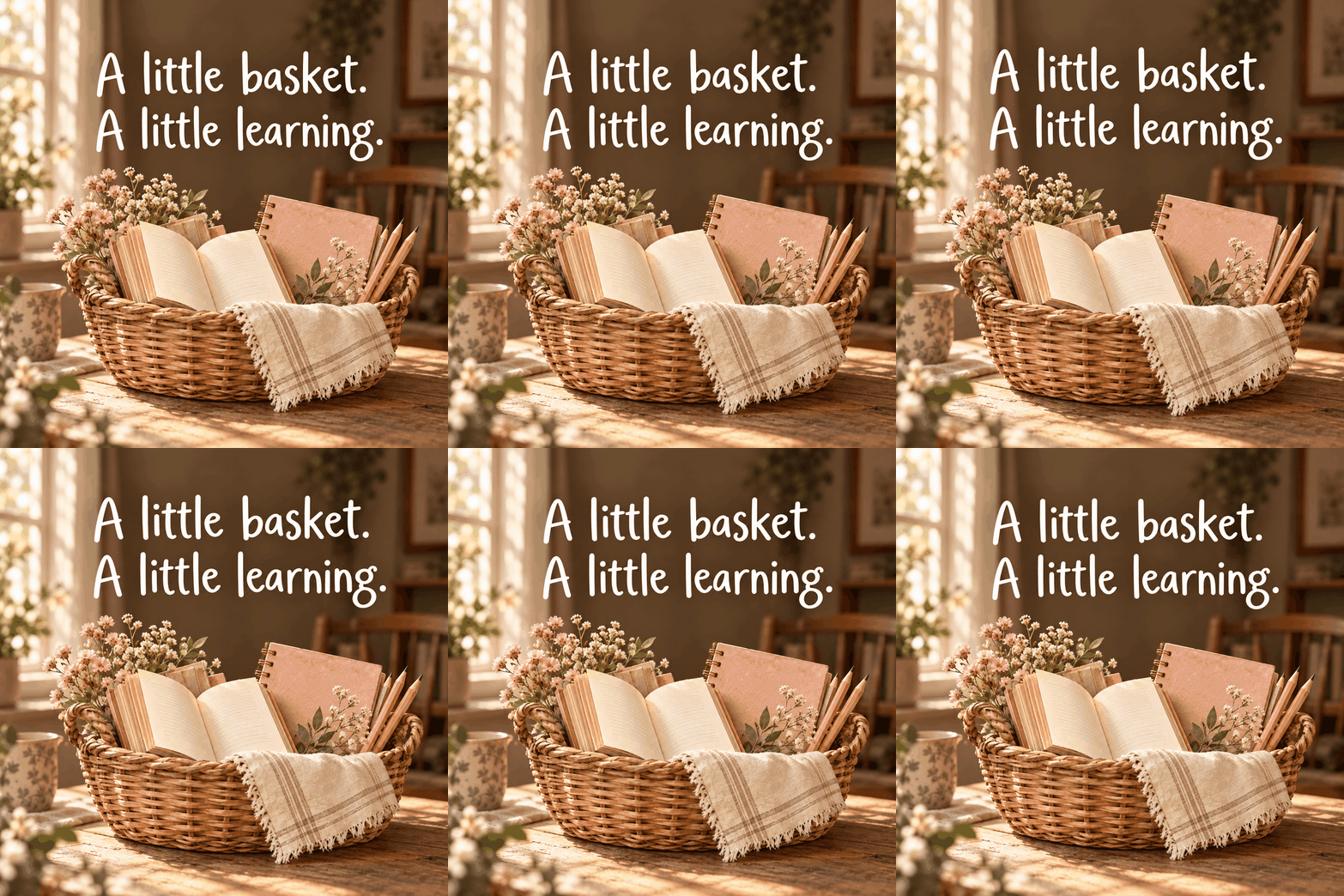
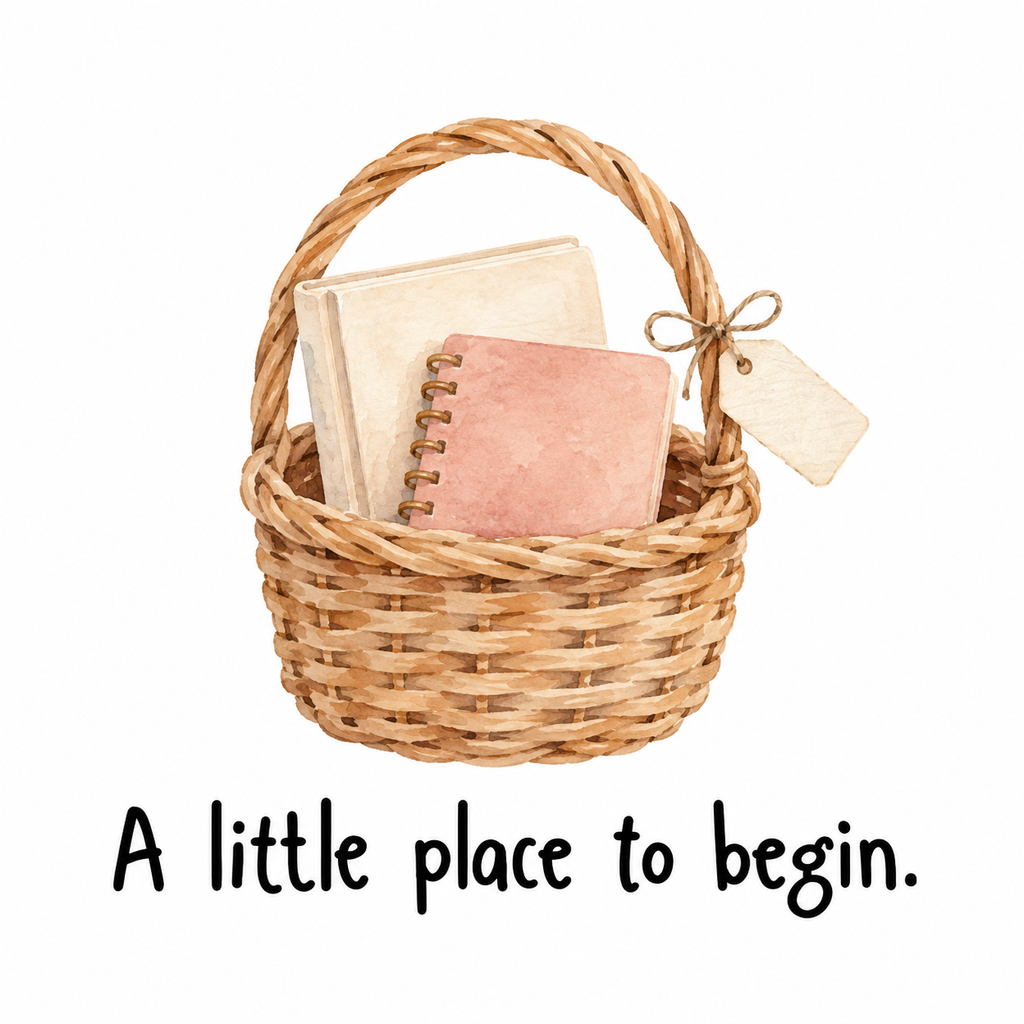
A homeschool learning basket gives you a small place to begin. Something to read, somewhere to write or draw, and one activity worth spending a little time on.
Use a basket, a tote, or a box you already own. It doesn’t need to look like somebody else’s homeschool shelf.
Give your basket one job
Before adding anything, decide when you want to use it.
Maybe it’s for a gentle morning start. Maybe it’s reading together after lunch. Or maybe you need a short review routine for the days when the original plan has already changed.
Choose one purpose first. Trying to squeeze every subject into the basket can turn it into another pile to sort through.
Start with a short reading, a pencil, and a notebook. Then add an activity your child can begin without a long explanation.
Three activity choices for different learners
For a preschooler: read, notice, and draw.
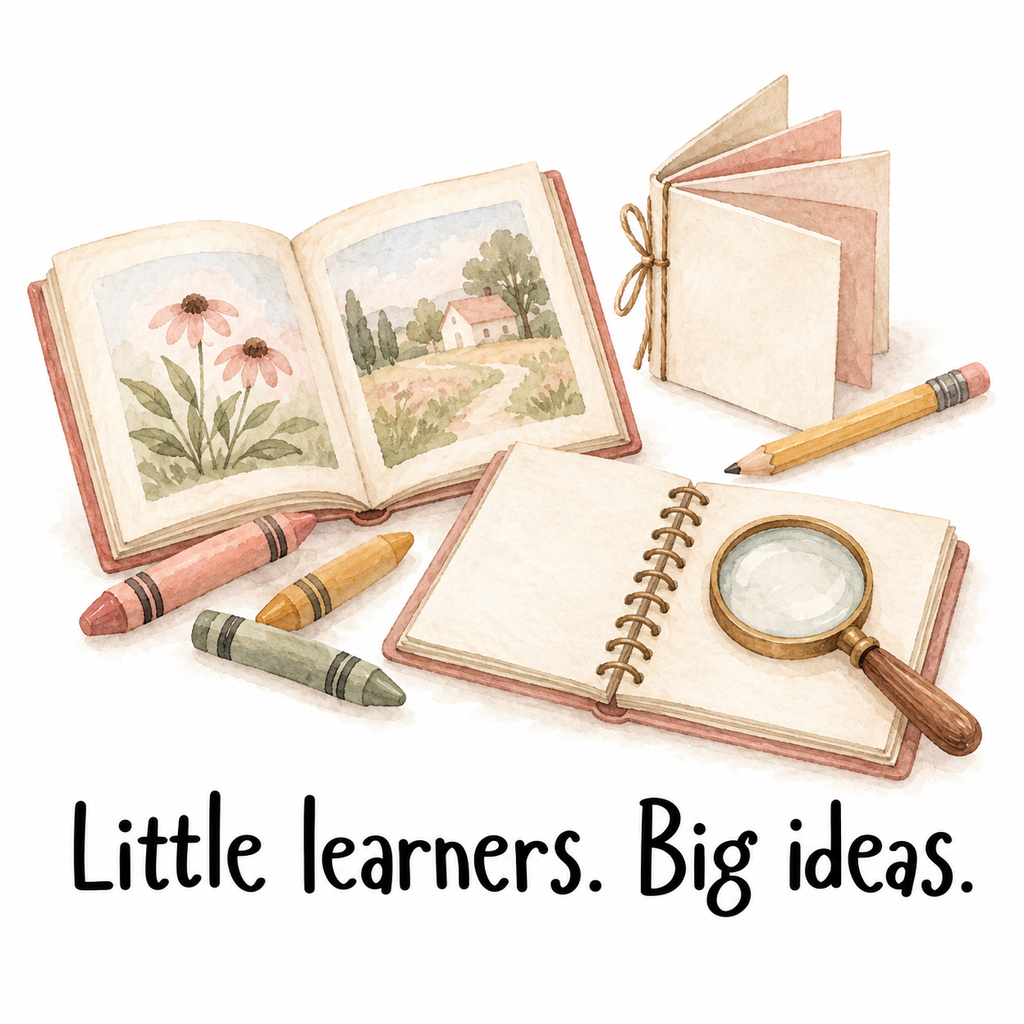
Choose a picture book to read together. Ask your child to find something round, point to matching colors, or draw a favorite part with chunky crayons.
Keep it conversational. There doesn’t need to be a worksheet afterward.
Stay involved and choose materials suitable for your child. Avoid small loose pieces around children who still put objects in their mouths.
For an elementary learner: read, retell, and make.
Add a short book or passage, a notebook, and a pencil.
After reading, invite your child to draw three events in order or write a few sentences about what happened. For a hands-on choice, fold paper into a little booklet and give the story a different ending.
If they get stuck, start with one question: “What do you remember first?”
For an older learner: read, question, and explain.
Choose a history, science, or literature passage that connects with current lessons.
Add three prompts to the notebook:
- What is the main idea?
- What supports that idea?
- What would you investigate next?
Your child can write a short response or explain it aloud, then return to the passage to check the details.
Choose the version that fits your learner. Reading confidence and the amount of help needed matter more than making the activity match a particular age label.
Make the first step easy to see
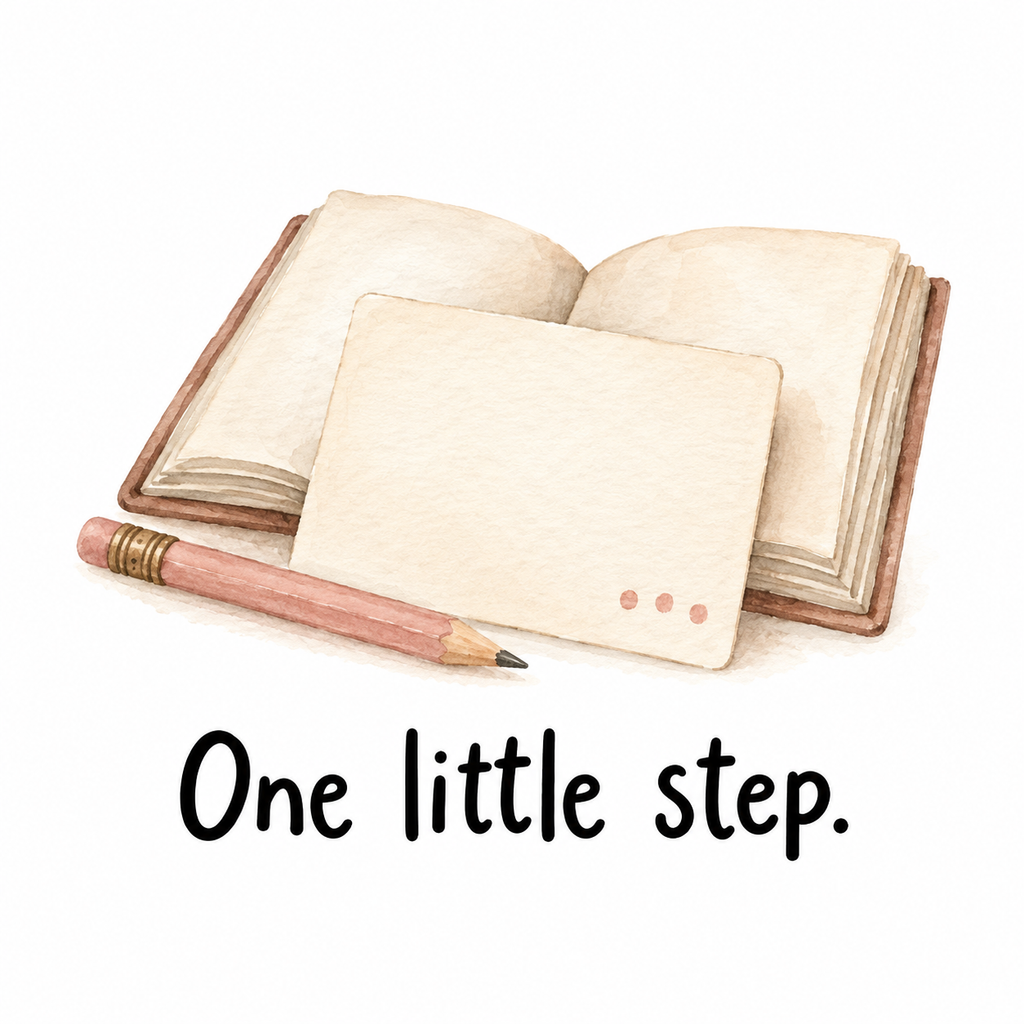
Place a small card on top:
Read a little. Tell what you noticed. Choose one thing to make or write.
Now the activity has a beginning and an end.
If your child needs help getting started, do the first part together. If the passage is frustrating, shorten it or choose something more accessible.
The basket is a starting routine. It doesn’t have to carry the entire school day, and it doesn’t replace adult supervision or a care arrangement during paid work.
Keep a small record
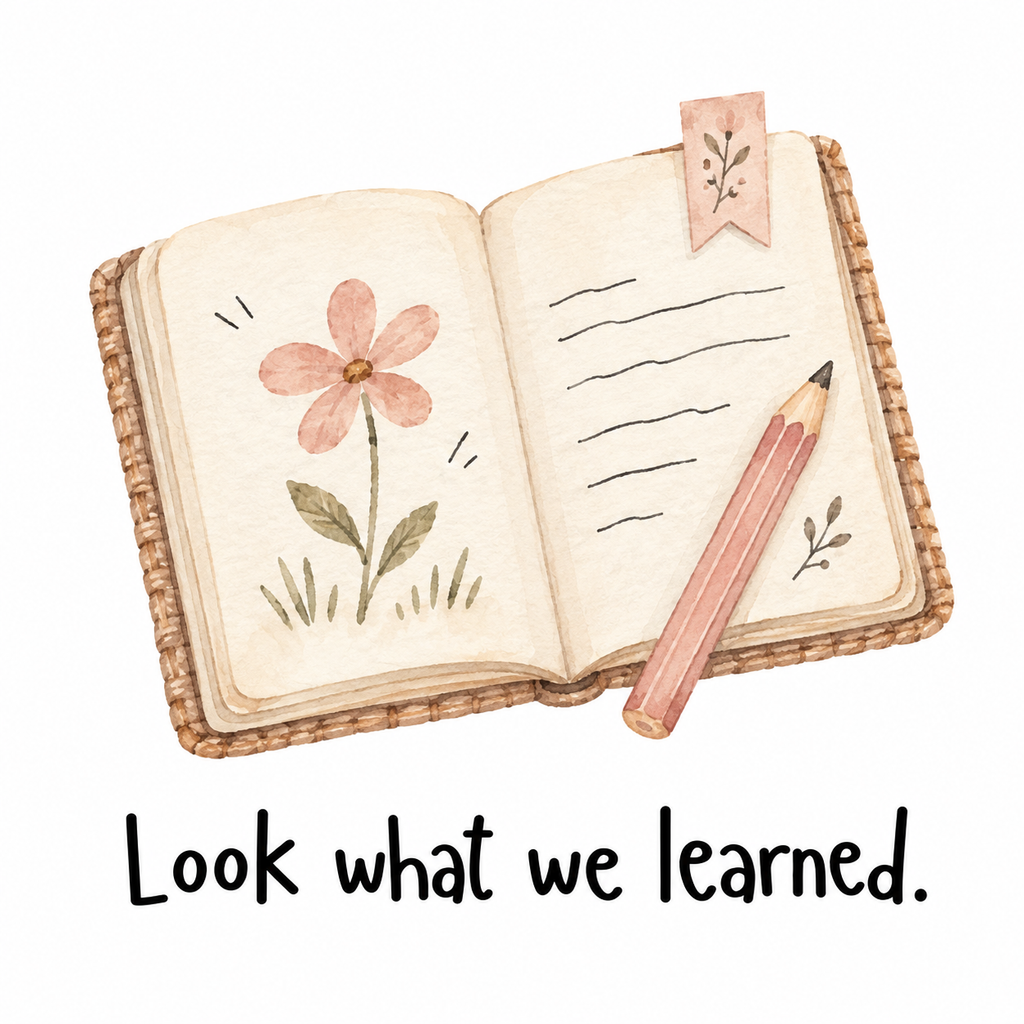
When you finish, write down what actually happened: the passage read, the activity completed, and anything worth revisiting.
A drawing or a few sentences can stay in the notebook.
There’s no need to turn a useful little lesson into a complicated project just to make it look more impressive.
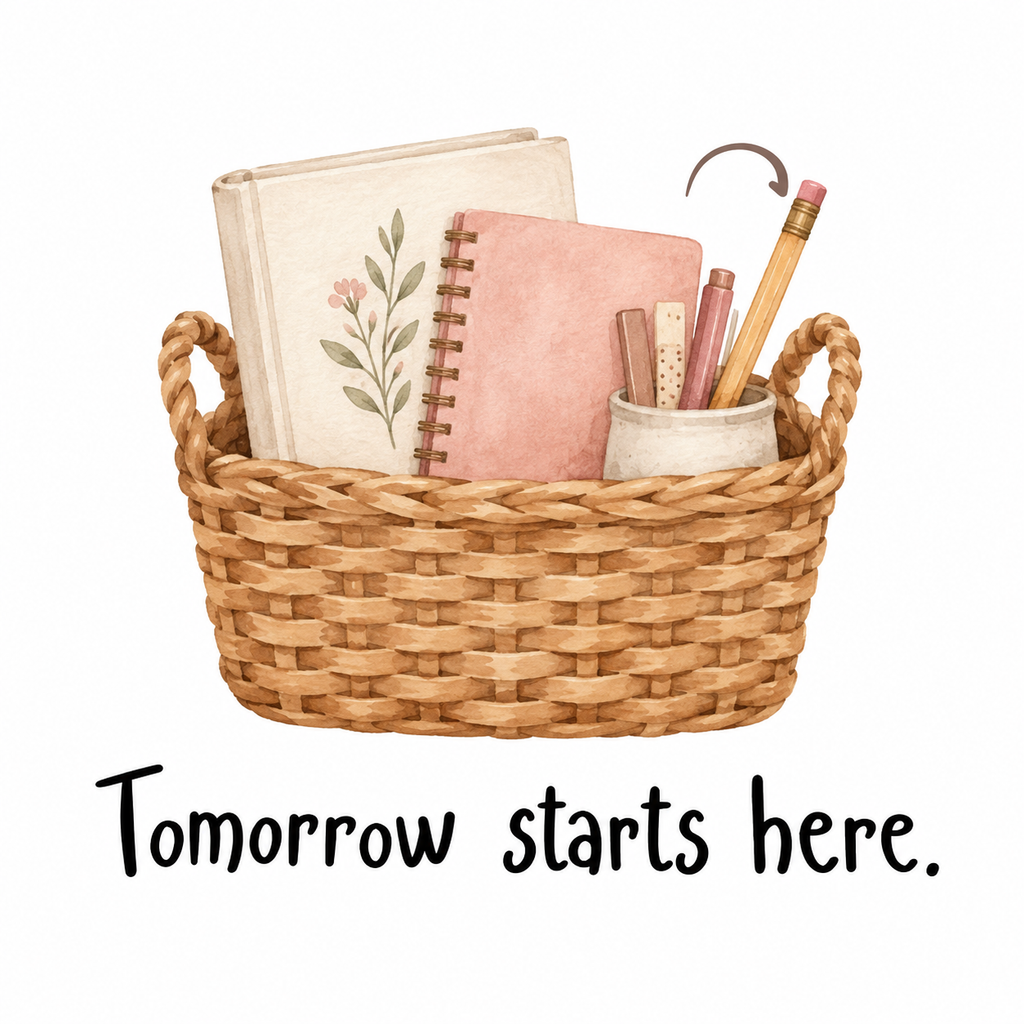
Leave tomorrow a starting point
Return the pencil. Remove anything finished. Leave one clear activity ready to begin.
Change the contents when the lesson or interest changes. You don’t need new supplies every morning.
Start with one basket and one learner. Notice what gets used, what needs more support, and what can come out.
What would go in your learning basket, a drawing activity, or a question to investigate?
~Until next time~
Leave a Reply